EARTHEN. BETTER NATURE. Cement Fondu. Curated by Josephine Skinner
materials: Transducer speakers, vibrational signal of seismic activity recorded at SYDS – Sydney Soft Rock Urban Monitoring site; coloured transparent window film
photo credits: Jessica Maurer
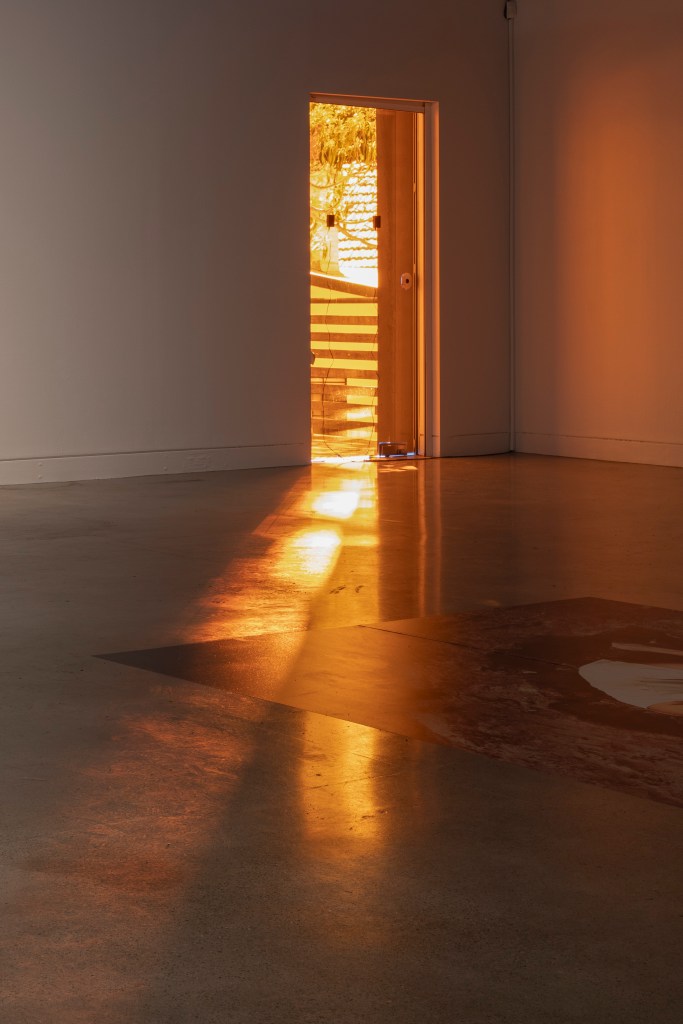
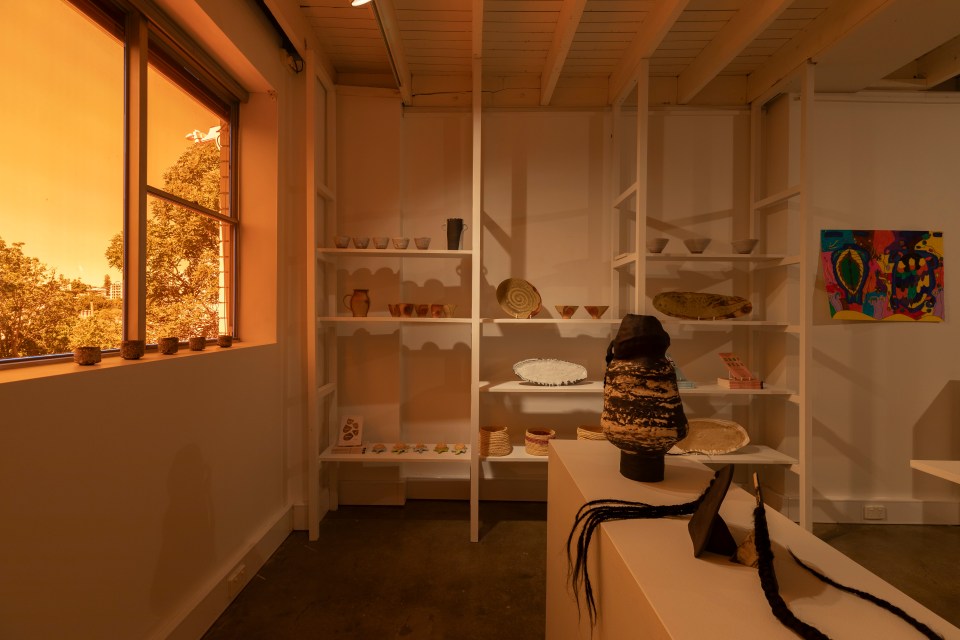

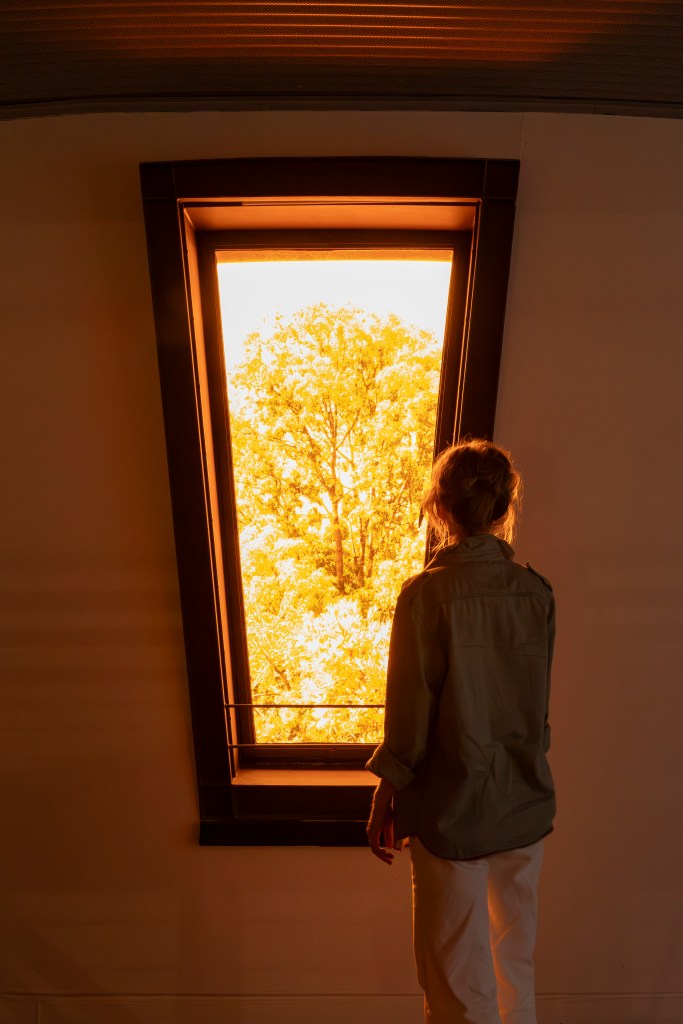

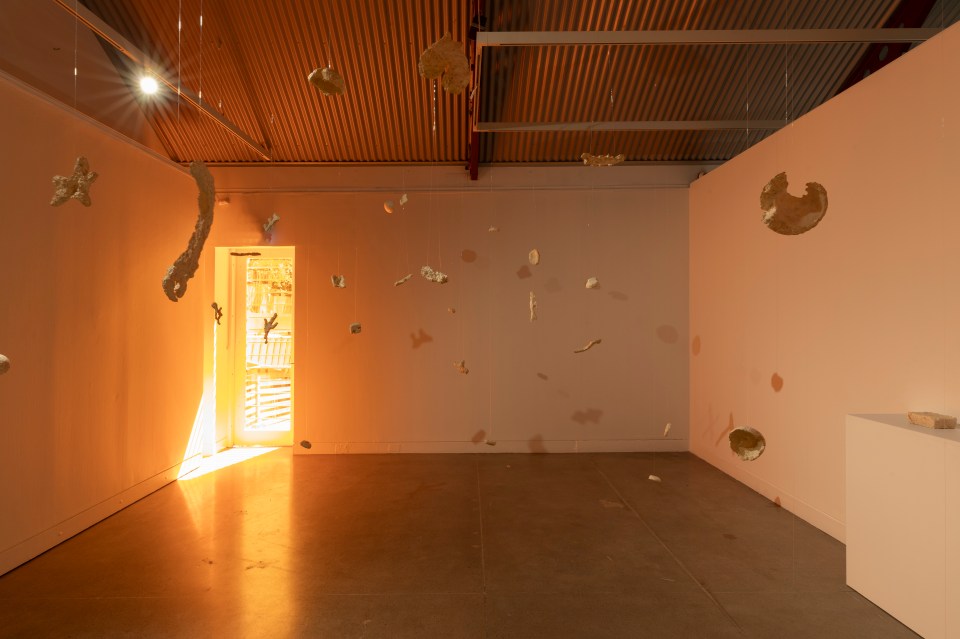
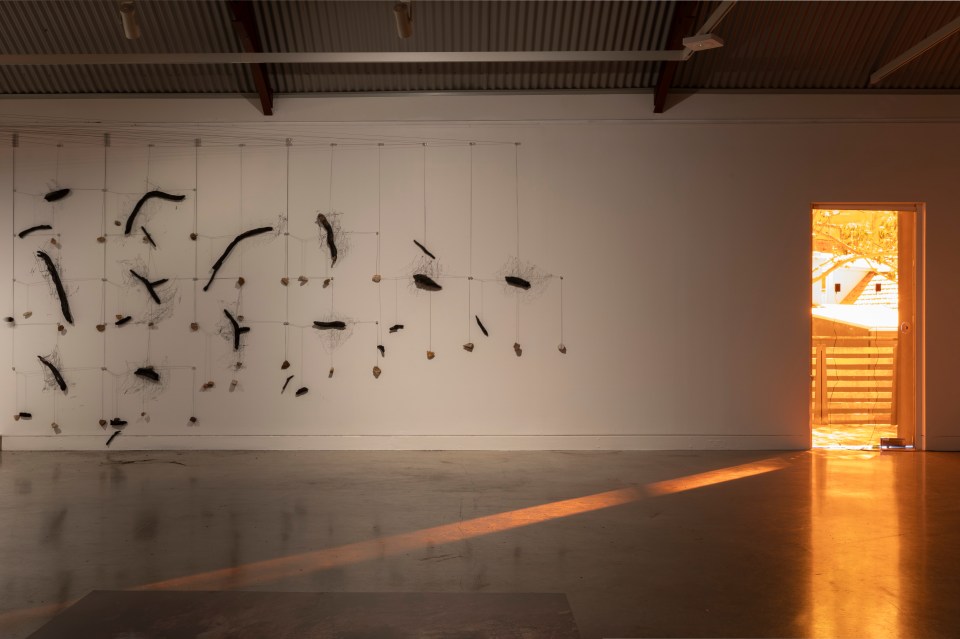
Created for the group exhibition EARTHEN, this variation of sampling (the slow seismogenic zone) covers the gallery’s windows and doors with earth-coloured transparent film and transmits vibrational data from local seismic activity through the glass via transducer speakers.
In collaboration with Geoscience Australia and seismologist Tobias Staal from the University of Tasmania, this seismic data is collected via technologies that have been developed to monitor low vibrational frequencies of the local environment. The soft sedimentary rock-material particular to the Sydney region impacts ways that earthquakes affect buildings constructed on the frangible ground, resulting in amplified shaking.
In soft rock monitoring (the slow seismogenic zone), local seismic data is transmuted through the glass pane as acoustic vibration (felt and heard), while the coloured window film creates a lithic lens from which to view the outside world, suffusing the light that falls into the gallery’s spaces. The multi-sensory experience implicates the gallery’s architecture and viewer in the subterranean infrasonic rumblings of the local terrain.
Acknowledgements: Tobias Staal, Research Fellow in Computational Physics (Geophysics), University of Tasmania; Jonathan Bathgate, Director Observatory Operations and Data, Geoscience Australia
 lucybleach.com.au