Attenuated Ground – the slow seismogenic zone (2021)
Slow Moving Waters. TarraWarra Biennial 2021. Curated by Nina Miall
Materials: double bass, toffee, seismometer, wooden table, tactile transducers, slow earthquake signal from the Japan Trench (Japan Sea), form ply, plaster, surface vibration speakers
Project Description: attenuated ground (the slow seismogenic zone) responds to the geologic phenomena of slow earthquakes, which produce a delayed, imperceptible rupture over extended periods. A double bass, the largest and lowest-pitched string instrument in the symphony orchestra, is embalmed in toffee. Tactile transducers excite its exposed strings, transferring the infrasonic pulse of slow earthquake events recorded within the Japan Trench prior to the 2011 Tōhoku earthquake, which resonate at a similar frequency as that of the human body’s vascular system. As the toffee liquefies over the course of the exhibition, the tone of the double bass’ sound shifts subtly, picked up by a seismometer embedded in the toffee and amplified by vibration speakers adhered to a nearby window. Leaching gradually into a plaster base, the toffee makes visible and audible subterranean processes which are otherwise imperceptible. Slow earthquake data recorded within the Japan Trench was provided by Prof. Yoshihiro Ito from the Disaster Prevention Research Institute, Kyoto University, Japan
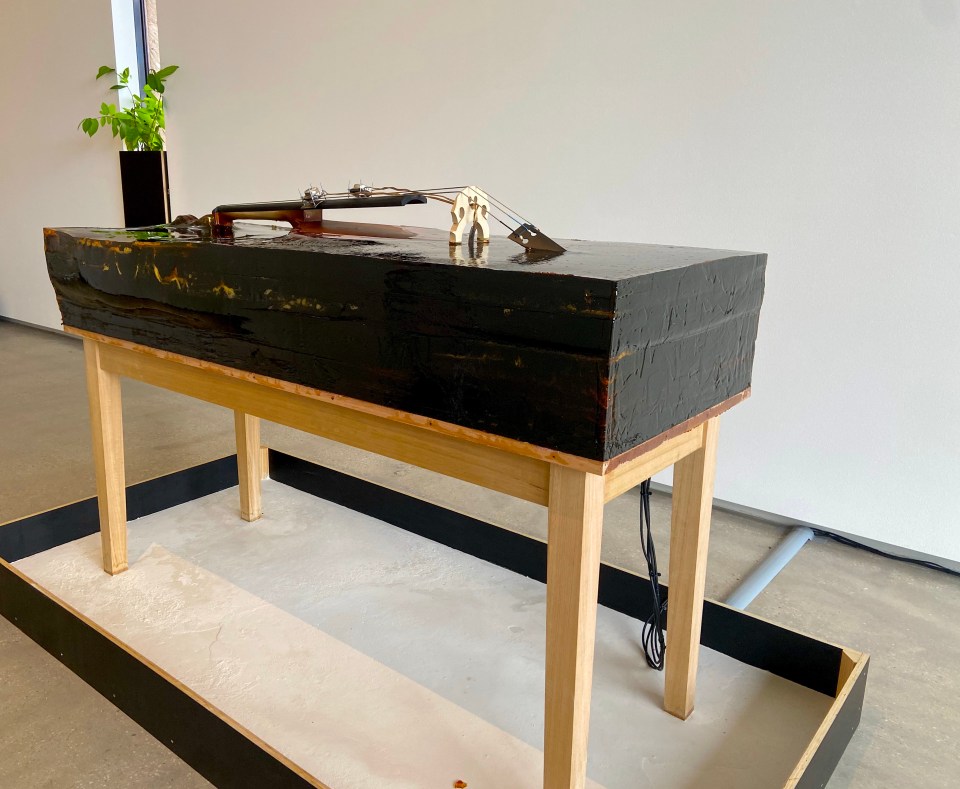

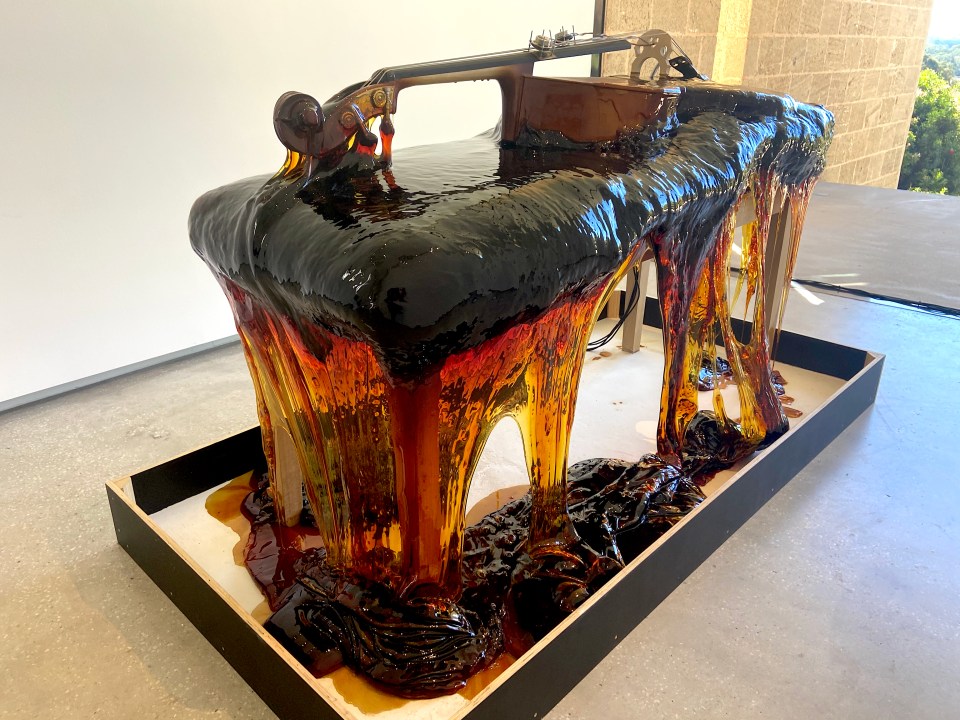
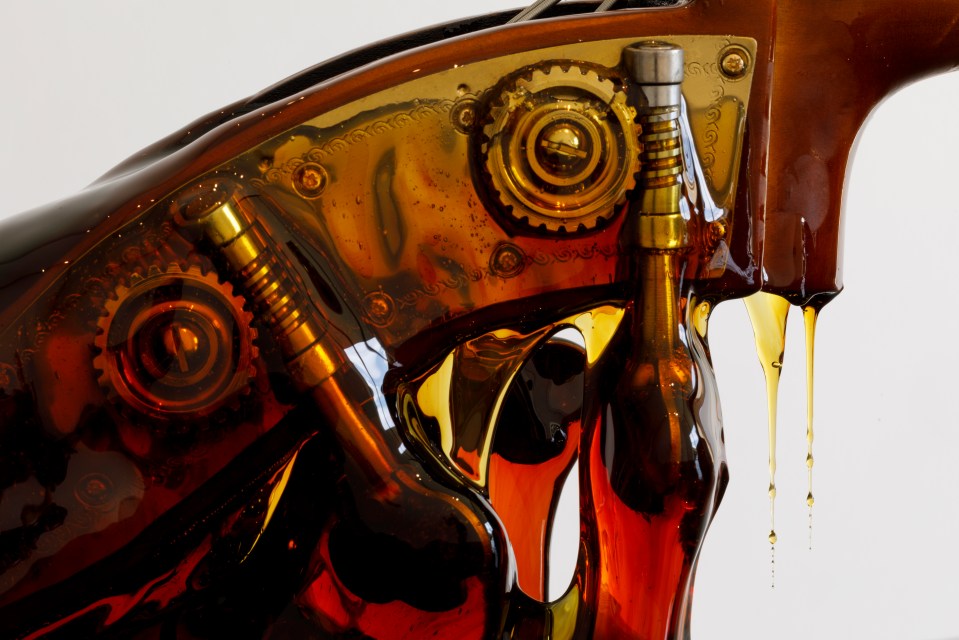
Video clip: detail of tactile exciters
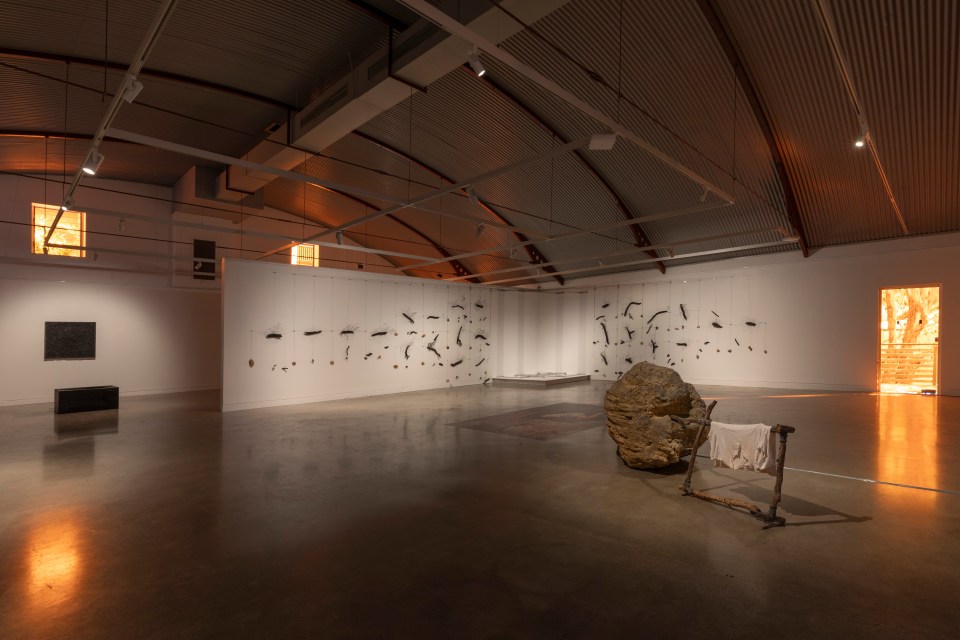
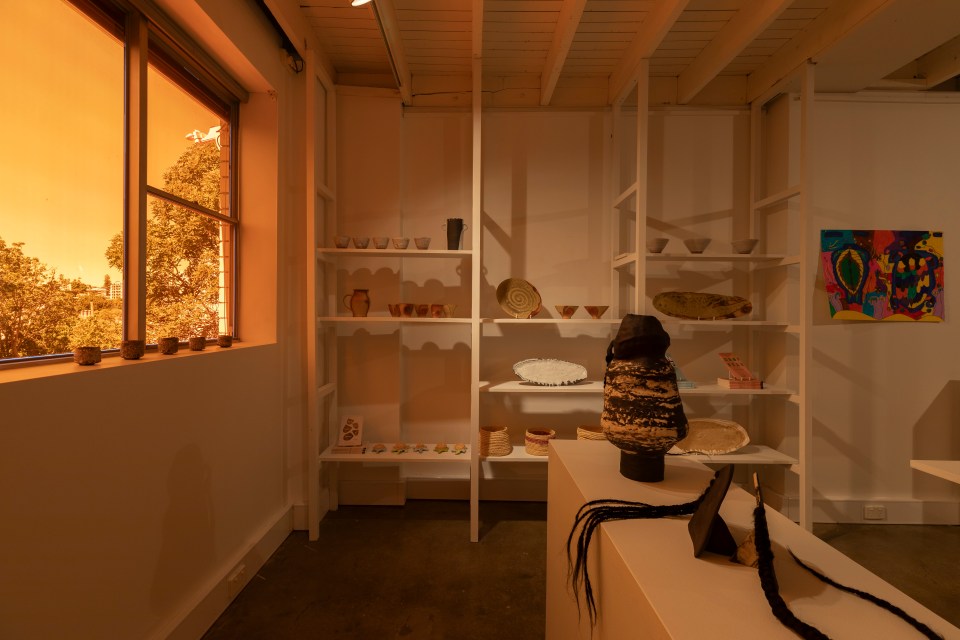
soft rock monitoring – the slow seismogenic zone (2023)
EARTHEN. BETTER NATURE. Cement Fondu. Curated by Josephine Skinner
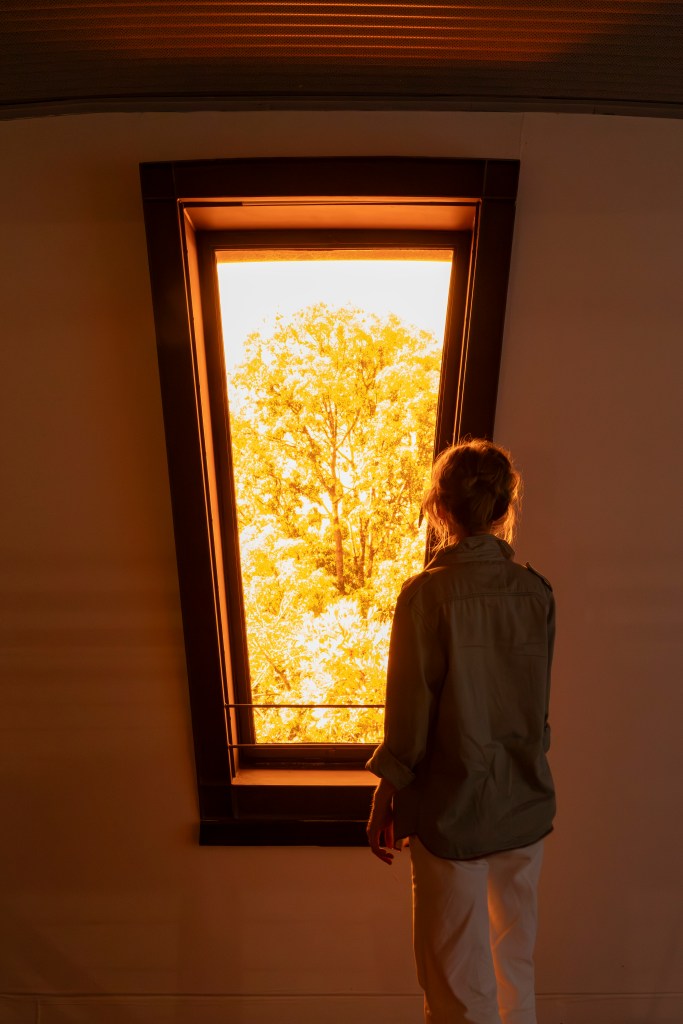
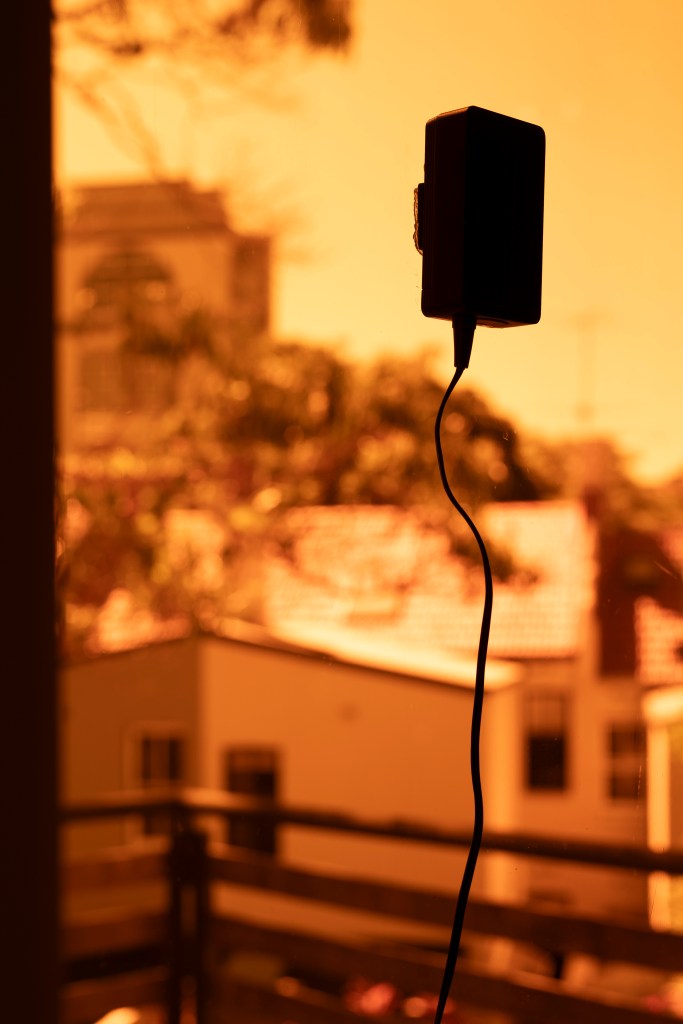
materials: Transducer speakers, vibrational signal of seismic activity recorded at SYDS – Sydney Soft Rock Urban Monitoring site; coloured transparent window film
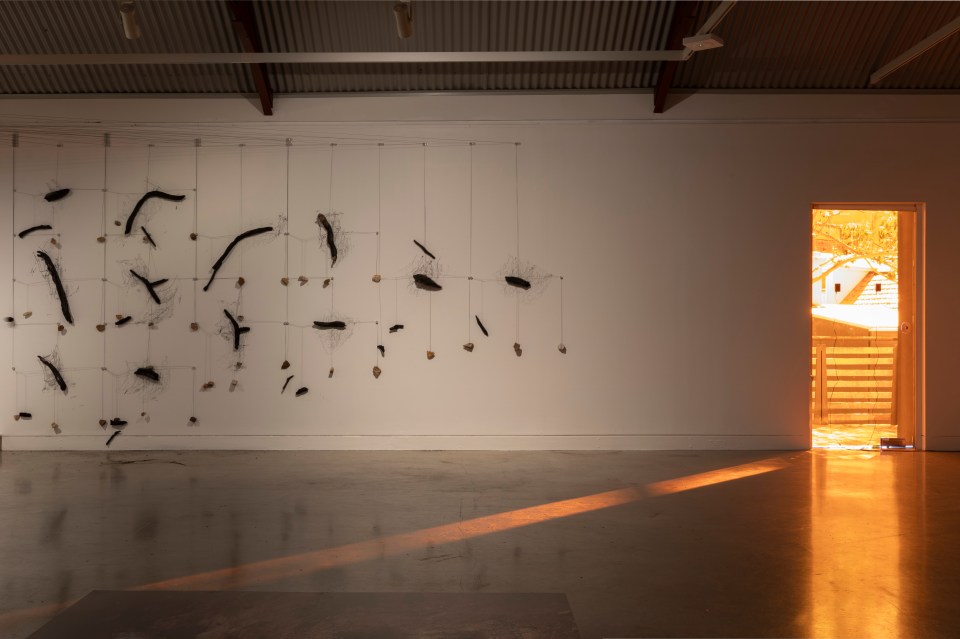
In soft rock monitoring (the slow seismogenic zone) the gallery’s windows and doors are covered with earth-coloured transparent film, creating a lithic lens from which to view the outside world, and suffusing the light that falls into the gallery’s spaces. Local seismic data is transmuted ia transducer speakers through the glass panes as acoustic vibration (felt and heard).
In collaboration with Geoscience Australia and seismologist Tobias Staal from the University of Tasmania, this seismic data is collected via technologies that have been developed to monitor low vibrational frequencies of the local environment. The soft sedimentary rock-material particular to the Sydney region impacts ways that earthquakes affect buildings constructed on the frangible ground, resulting in amplified shaking.
The multi-sensory experience implicates the gallery’s architecture and viewer in the subterranean infrasonic rumblings of the local terrain.
Acknowledgements: Tobias Staal, Research Fellow in Computational Physics (Geophysics), University of Tasmania; Jonathan Bathgate, Director Observatory Operations and Data, Geoscience Australia
By This Lake (2021)
Inland Tides. Curated by Grace Herbert. RISING Festival. Melbourne 2021
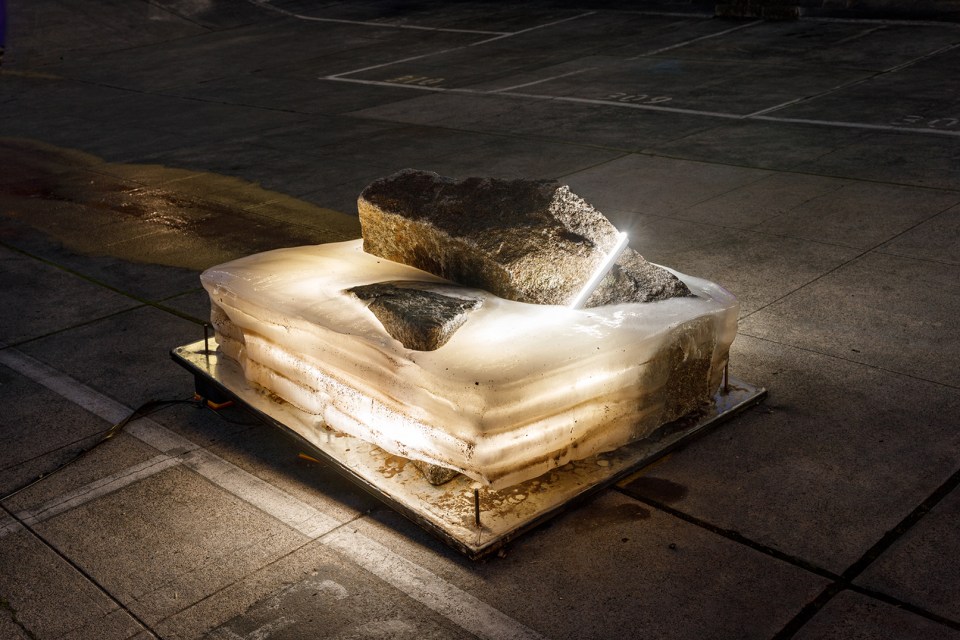
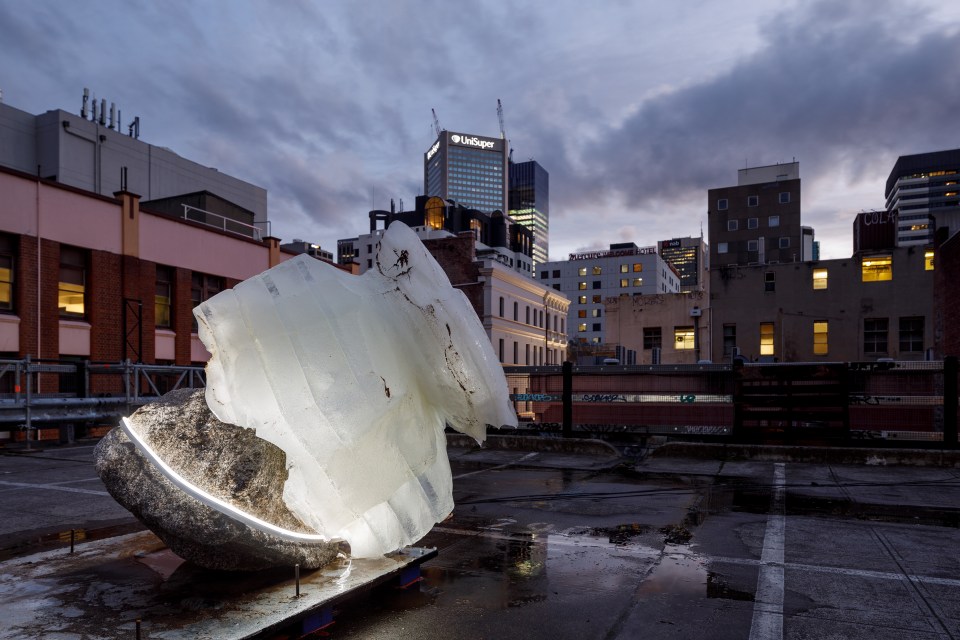
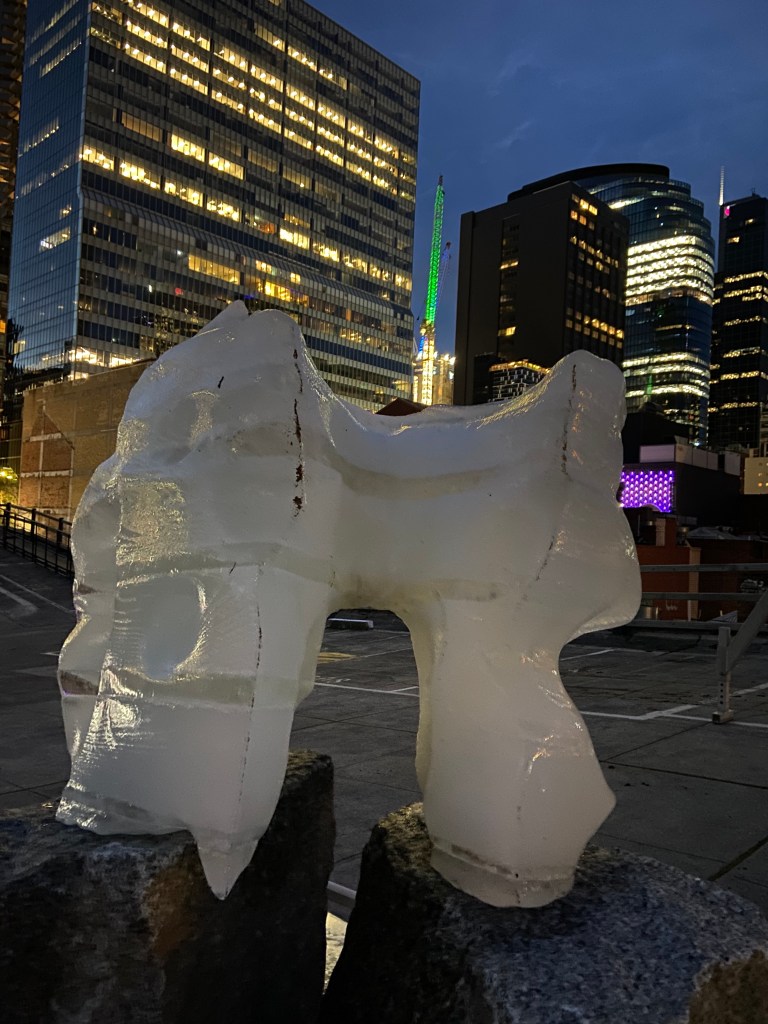
Materials: frozen inland lake water, frozen civic water, Harcourt granite, neon light, hydrophones, speakers
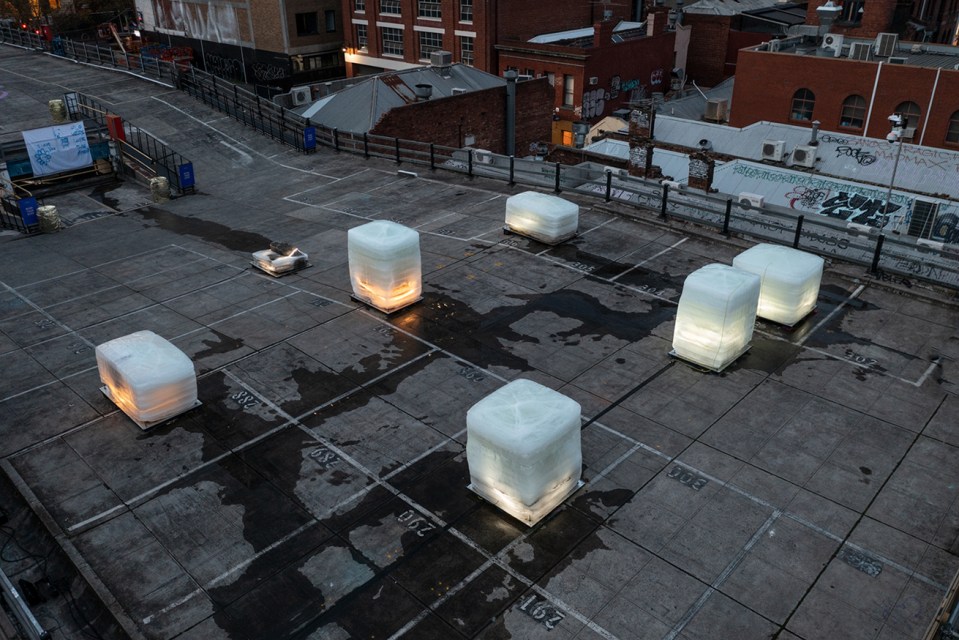
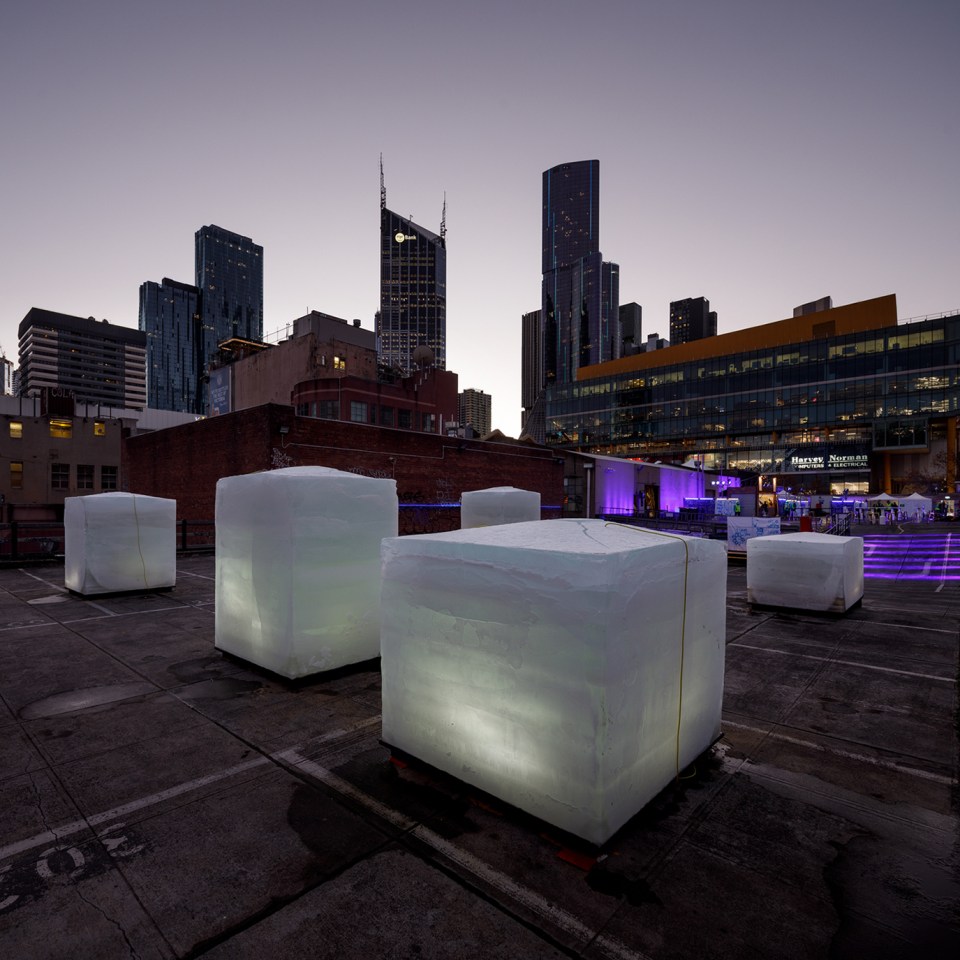
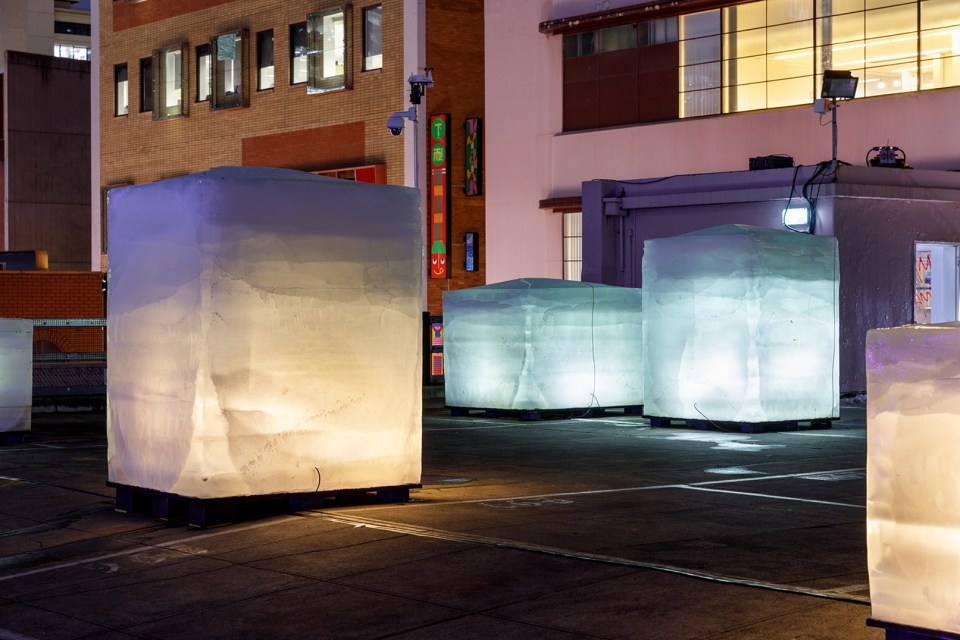
Project Description: Large blocks of cast ice were ‘parked’ on the top floor of the Golden Square Car Park in the centre of Melbourne’s central business district. The ice blocks were composed of frozen layers of water, sourced from both the Melbourne water supply via the tap, and inland lakes in Victoria. Frozen into the ice blocks, hydrophones captured the slowly cracking ice. The live sound was amplified through speakers installed in a nearby stairwell. Embedded within each ice block were boulders of Harcourt granite used for the construction of the city of Melbourne. Around each boulder neon lights pulsed an algorithm based on the approximate time of the granite’s formation, 358,900 000 million years ago, with the duration of each pulse reflecting the average length of a human breath.

Brothers (2021)
Composing Archipelagos. Curated by Jasmin Stephens. Contemporary Art Tasmania
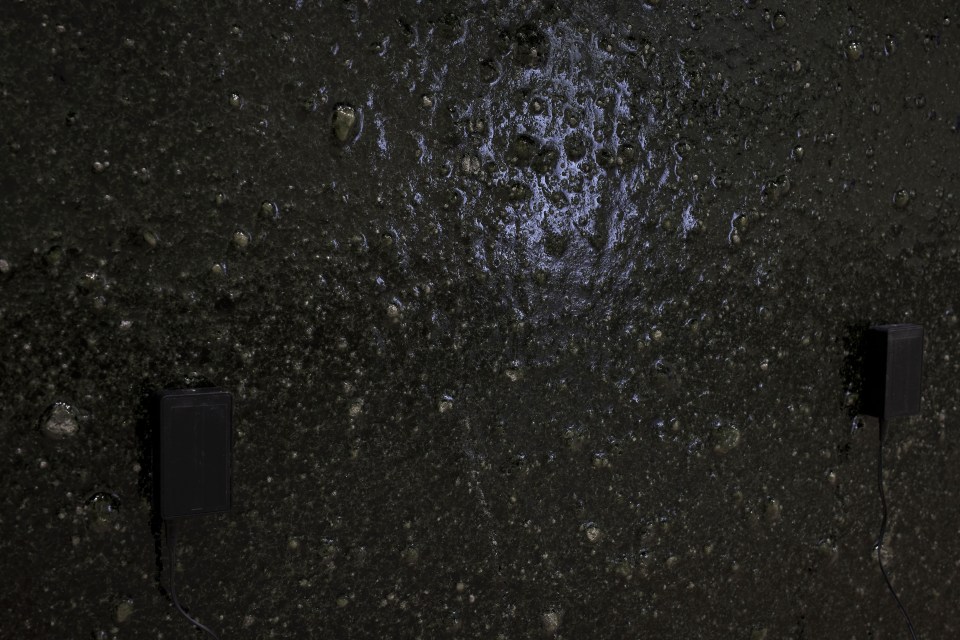
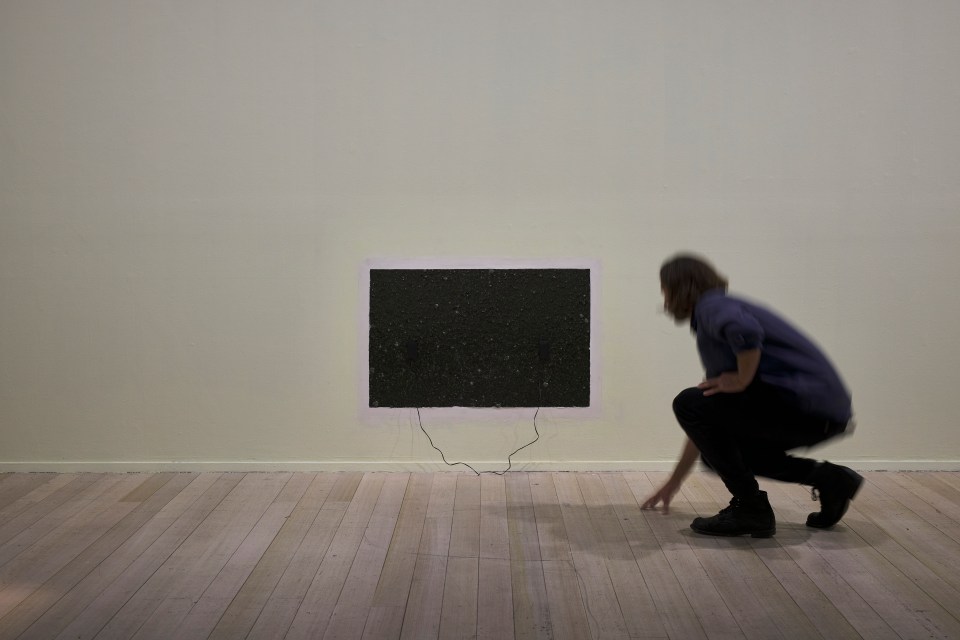
Materials: obsidian, crystal, transducer speakers, harmonic tremor acoustic data from Brothers Volcano (Aotearoa New Zealand)
Project Description: Obsidian from Tūhua Mayor Island, located off Aotearoa New Zealand’s Bay of Plenty, was melted and re-fused with crystal to form a slab which was inserted into the gallery wall. Transducer speakers were attached to the volcanic glass slab, which amplified the sound of harmonic tremor recorded at the Brothers Volcano, which forms part of an archipelago of sub aquatic volcanic forms within the Kermadec Sea Trench. Hydroacoustic recordings of harmonic tremor were provided by Dr. Robert Dziak, Pacific Marine Environmental Laboratory, National Oceanic and Atmospheric Administration

audio clip: Brothers Volcano harmonic tremor audio rendering (extract)
Rueremus (2021)
MONA FOMA 2021. Hobart, Tasmania
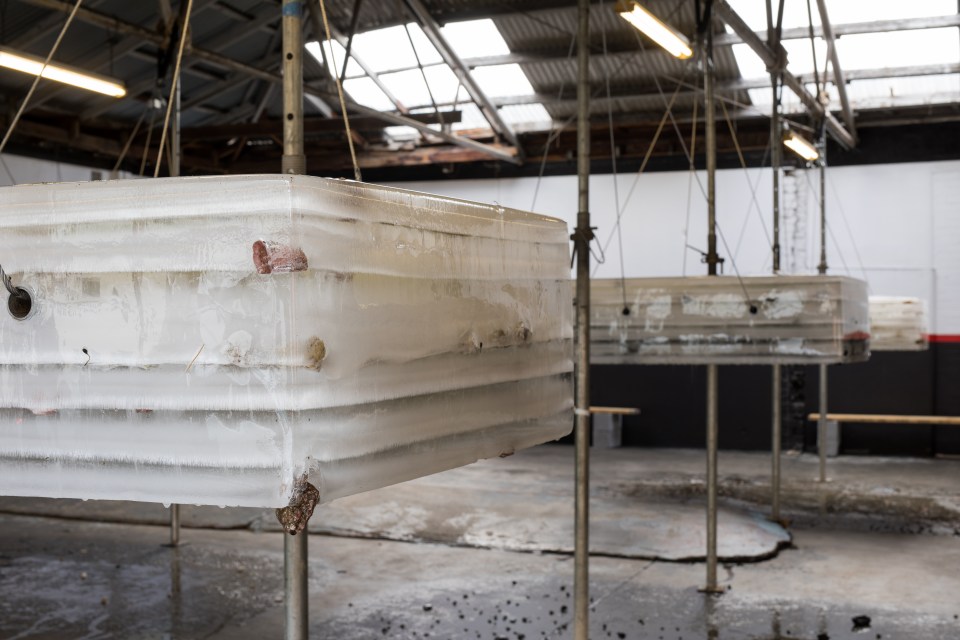
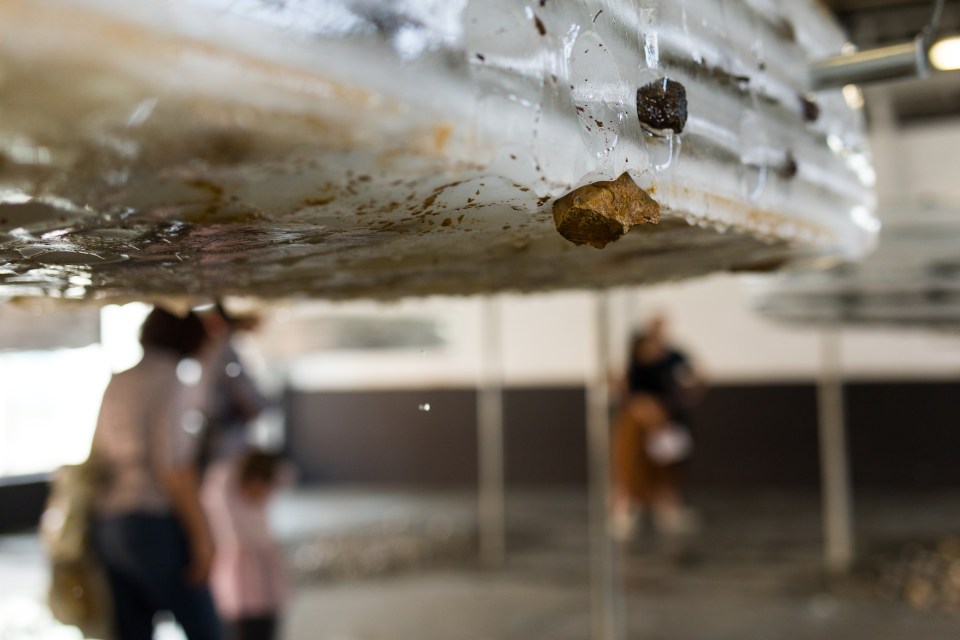
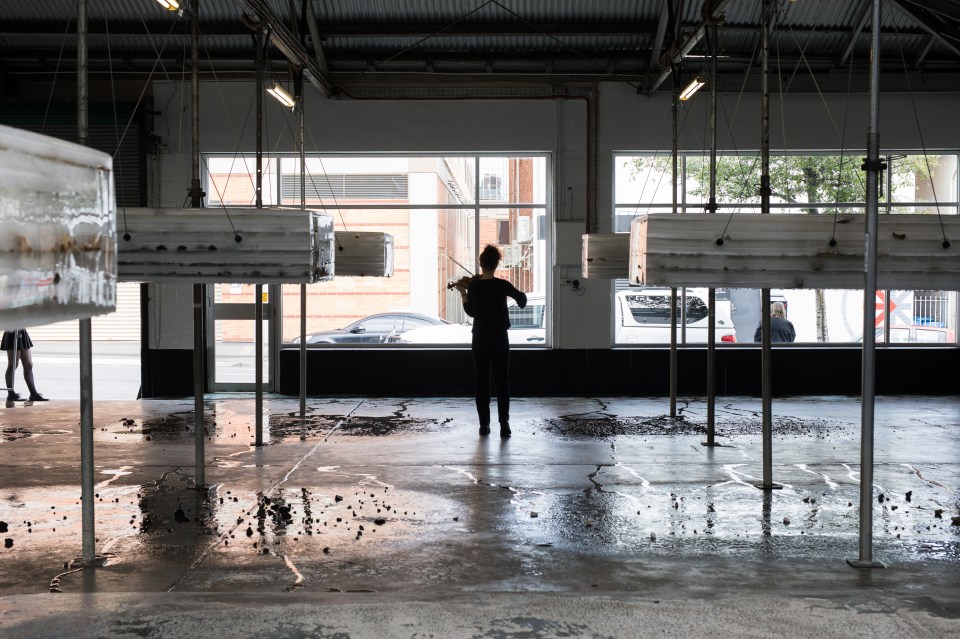
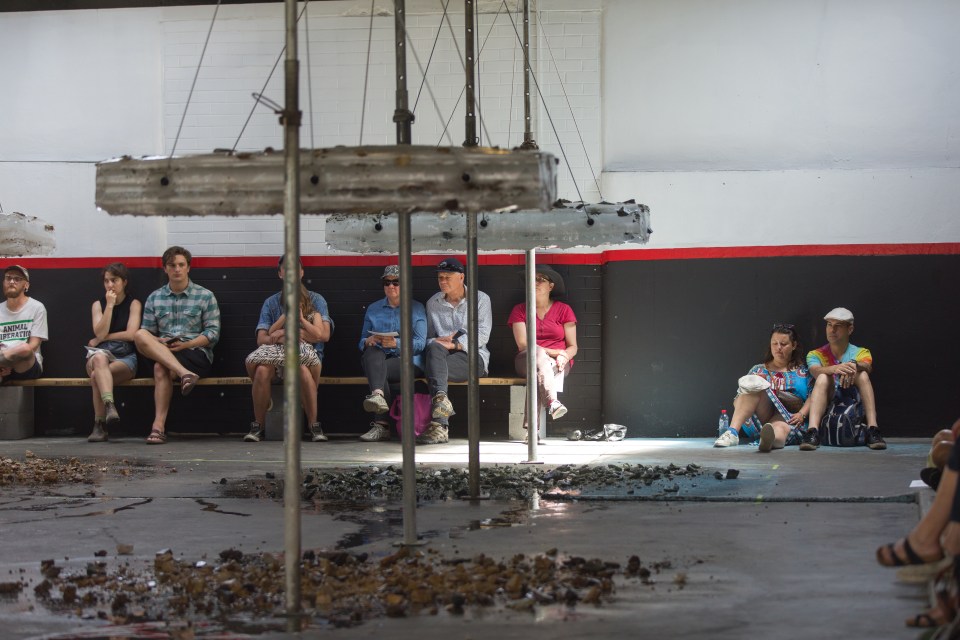
Materials: frozen civic water, rocks representing the different geologic eras of Tasmania, steel tubing, steel cable, acrow props, and live performances by violinist Alethea Coombe
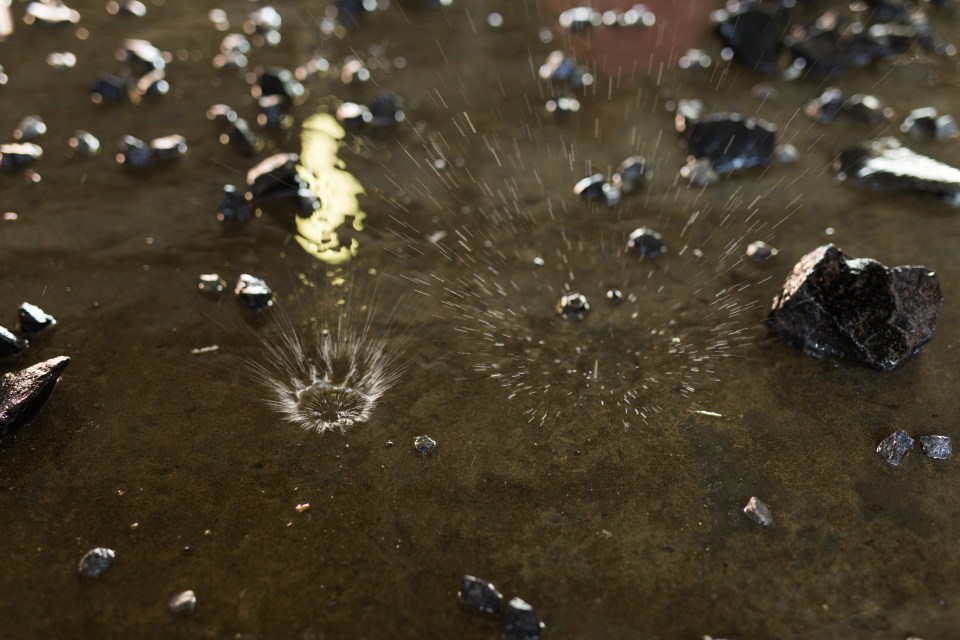
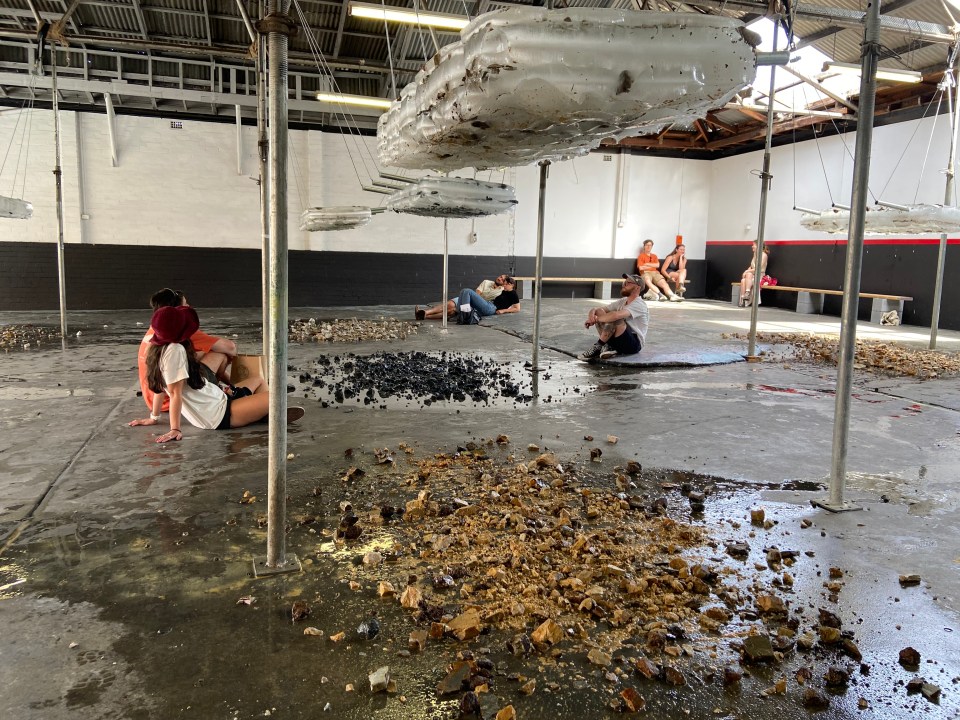
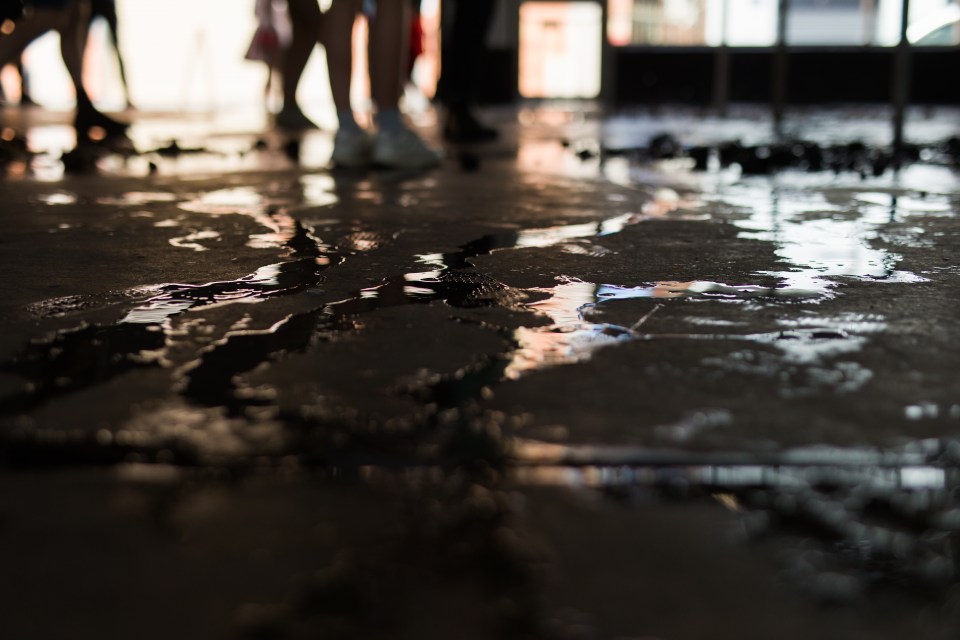
Project description: Suspended within a former car mechanic workshop, large blocks of ice contained frozen layers of rocks, each representing the different geologic periods of lutruwita / Tasmania. As the ice melted, the rocks fell to the concrete workshop floor.
Violinist Alethea Coombe performed adaptations of John Cage’s One6, a composition comprising long, flexible time brackets, with long overlaps between them. Performing with the ice sculptures, Alethea played sustained tones, responding to the unstable blocks of ice and sonic impact of the falling rocks.

Video Clip – Alethea Coombe violin performance of One6 by John Cage
Underground (2015)
Contemporary Art Tasmania Solo Commission
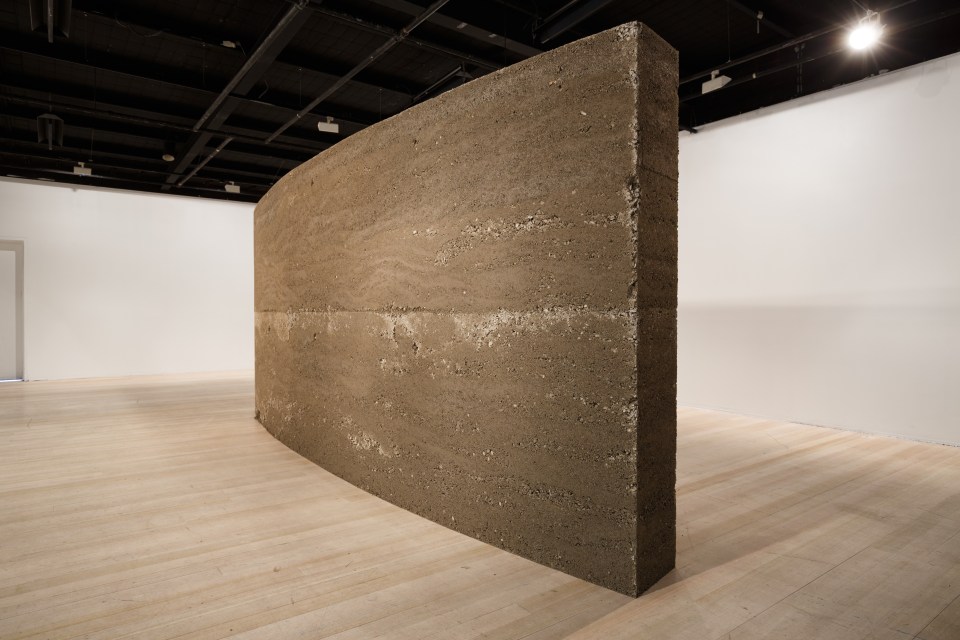
Materials: crushed and rammed concrete, mining vehicle tyre rubber inner tubes, hosing, real-time global seismic data stream, mobile seismic unit, motion-sensors
Project description: A simple arc wall comprised of rammed, re-cycled crushed concrete contained two earthmover tyre inner tubes connected via hoses to an air compressor. Global seismic data from live web-based monitoring streams, as well as local ‘vibrations’ collected within the gallery administration and gallery space, triggered the air compressor to release air and inflate the inner tubes. Contingent on the intensity and duration of the local or global live seismic events, the inner tubes inflated and destabilised the overall form, triggering a process of destruction over the course of the exhibition.


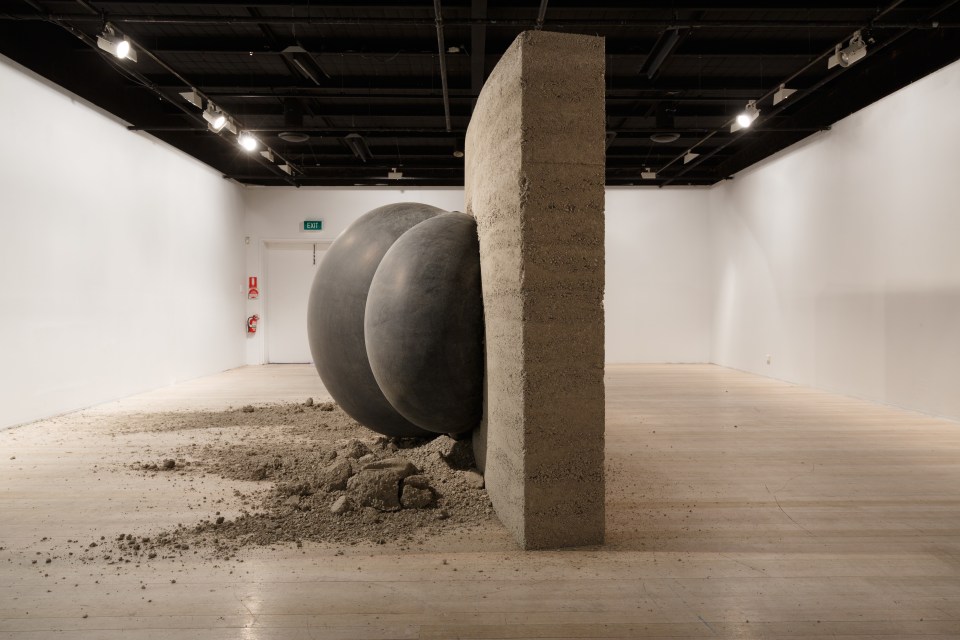
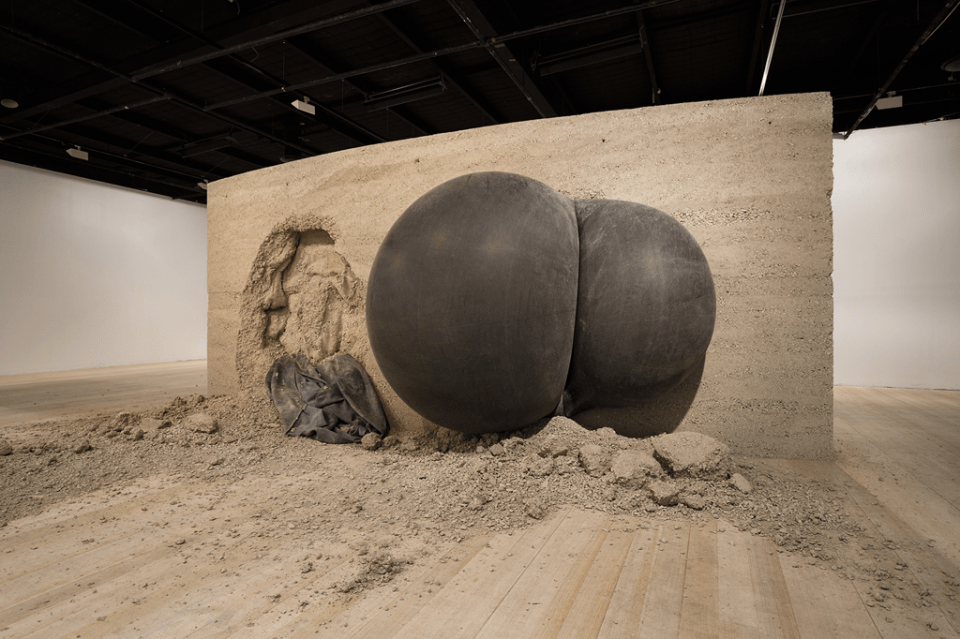
Video Clip – time lapse of global seismic events and local vibration impact on the artwork
Rhyolite (2019). Book 17
Lost Rocks (2017-2021). A Published Event,Yale University, RMIT UniversityUniversity of Melbourne
Publication description: Lost Rocks (2017-21) is an art project that engages readers, artists and audiences with the Natural Sciences, specifically the field of geology. Lost Rocks (2017-21) is a 5 year publishing project that invites 42 artists and writers to select a missing rock from a discarded Tasmanian rocks and minerals specimen board, formerly used for educating students of geology. Each artist is invited to research a missing rock or mineral, and compose a 96 page fictiönella in response, communicating new geological knowledge through creative, experimental and communicative texts. Rhyolite draws on experiences of volcanic phenomena, artefacts and creative process.
 lucybleach.com.au